Agartha’s prohibition on resurrecting the dead
5 Centimeters per SecondAgartha’s prohibition on resurrecting the dead is not a declaration that resurrection cannot happen; it is a warning against interrupting the passage between life and death. The rule gives Ryuuji Morisaki’s search for a way to restore Lisa a moral and personal limit: bringing someone back may be possible, but it does not reverse loss without consequence. Nami’s history makes that cost concrete, while the later exchange between Morisaki and Shin turns the prohibition into a demand to live with grief rather than erase it.
The Prohibition and Its Logic
The prohibition is raised when Morisaki asks the Elder to answer a question from earlier. The Elder says that in Agartha it is forbidden to resurrect the dead. Asuna Watase has nearly forgotten that the possibility of resurrection is the reason for the difficult journey, and the Elder’s answer brings that purpose back into focus. Her reaction also marks a crucial distinction: a ban would make little sense if the act were absolutely impossible. Morisaki makes that inference explicit, treating the prohibition as evidence that resurrection can be done.
The distinction does not make the rule a simple obstacle to be overcome. Asuna feels hope at the implication, but also anxiety as she waits for the Elder’s explanation. The prohibition points at once toward a possible remedy and toward a danger the travelers do not yet understand. Its force lies in that double meaning: resurrection is imaginable, yet the fact that Agartha forbids it signals that possibility alone does not make it safe or justifiable.
The Elder’s Explanation
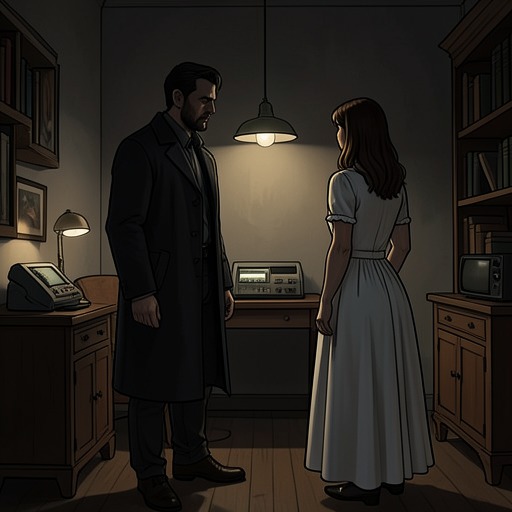
Pouring tea as he answers, the Elder places life and death within a greater flow. Humans, he says, are not entitled to interrupt it, and doing so will bring happiness to no one. His response shifts the question from whether the dead can return to what such a return would mean. The rule is presented not merely as a limit imposed on people, but as a boundary tied to the order of life and death and to the suffering that follows when it is crossed.
Morisaki does not back down after hearing this. His persistence preserves the conflict at the heart of the prohibition: the Elder speaks for accepting a larger order, while Morisaki is pursuing a particular lost person. The exchange does not resolve that conflict by proving resurrection impossible. Instead, it leaves the possibility open while warning that an individual’s wish cannot be separated from the consequences of acting on it.
Nami’s Account of the Price
The warning becomes specific when a woman asks Morisaki whether he knows the price of resurrection. She identifies herself as Nami and says that her lover was Eve and that she died five years earlier. Morisaki finds it strange to hear a dead person speak, an experience he regards as far beyond what could happen on the surface. Nami’s presence makes the subject of resurrection immediate: she is not discussing an abstract rule, but speaking as someone who has returned from death.
When Morisaki asks what must be paid, Nami explains that the god governing death would not spare people without a price. To do so would release humanity from death and obstruct the great flow of life. She does not, however, describe the price as a fixed payment that can be calculated in advance. It varies with the time, the situation, and the individual. The rule therefore offers no predictable exchange by which a seeker could safely secure a return; its cost depends on circumstances and may not be knowable beforehand.
Morisaki eventually asks whether this is why Eve is absent. Nami nods and explains that the price of bringing her back was Eve’s life: one life for another. The exchange turns the rule’s abstract language into an intimate loss. Asuna Watase thinks of The Gift of the Magi, but distinguishes its heartwarming sacrifice from the cruelty of Nami’s situation. Nami’s return has not restored the life she wanted to share; it has left her alone. The account makes the prohibition legible as protection against a bargain in which recovering one person can mean losing another, without promising that the survivor will find meaning in the exchange.
Consequences for Morisaki and Asuna
The cost revealed by Nami bears directly on Morisaki’s pursuit of Lisa. He has been asking how resurrection can be achieved, but Nami’s testimony forces the question of what its success might demand. Her answer does not tell him what price would apply to his own circumstances; she has said that the cost varies. That uncertainty leaves his hope exposed to a consequence he cannot simply plan around or treat as a known sacrifice.
The later scene brings the conflict to a personal crisis. Morisaki, tearful, asks Shin to kill him. Shin refuses and tells him that his brother spoke to him, conveying the instruction to embrace loss and keep living. As Morisaki’s tears fall on Asuna, she slowly opens her eyes, and she gently hugs him. The moment does not erase the loss or make the prohibition disappear. Instead, it gives the rule an emotional counterpart to the Elder’s account of the great flow: the living must continue after death, rather than demand that death be undone at any cost.
Narrative Significance
The prohibition governs more than a forbidden act; it defines the terms on which the story’s hope for resurrection can be understood. The Elder supplies its principle, Nami supplies its human example, and Morisaki’s anguish shows what the principle asks of someone unwilling to accept loss. These stages progressively narrow the distance between a philosophical claim and a personal decision: first resurrection is possible, then it has a price, and finally the desire to reverse death must be faced alongside the pain of continuing without the dead.
The rule does not make grief a mistake, nor does Nami’s story make the loss seem fair. Its force comes from refusing to treat resurrection as a clean restoration. Nami’s return is bound to Eve’s absence, and Morisaki’s final plea is met not with a way to undo suffering but with Shin’s appeal to keep living. In this way, the prohibition makes the boundary between life and death consequential while leaving the grief on the living side of that boundary fully present.